MAIN MENU
SEARCH
Services

Landlords

Tenants

Brokers

Vendors


Renting out a property always involves certain risks. What if a tenant damages the property? What if they fail to pay the rent, or pay less than the agreed amount? These are some of the concerns that can make potential landlords hesitate before entering the rental market.
However, Dubai's tenancy framework provides legal mechanisms for landlords and tenants to address rental disputes. The Rental Dispute Settlement Centre (RDSC), commonly referred to as the Rental Dispute Center (RDC), is the specialised authority responsible for resolving many rental disputes in Dubai.
Understanding the appropriate process can help landlords deal with property damage, rent defaults, or disagreements over rental payments in a more structured way.
Property damage and disagreements over responsibility for repair costs are among the common problems landlords can face with tenants.
The appropriate course of action depends on the circumstances, the tenancy agreement, the nature of the damage, and the applicable rules. For complicated disputes, obtaining advice from a qualified rental dispute lawyer in Dubai can help you understand your rights and the correct procedure.
Even so, landlords should keep a clear record of what happened. A useful starting checklist includes:
The tenancy agreement and applicable Dubai rental legislation are important when determining responsibility for damage. Landlords should also distinguish between damage caused by a tenant and ordinary wear and tear, as the legal treatment can differ.
Rather than relying on an old fixed procedure or assuming that every damage claim leads directly to eviction, landlords should check the current legal requirements applicable to their particular circumstances.
A tenant who fails to pay rent can create significant financial pressure for a landlord. So, what should you do?
Start by reviewing the tenancy agreement and confirming that the payment is actually overdue. Sometimes a delay may be caused by a bank transfer or administrative issue.
Once a payment is overdue, communicate with the tenant promptly and keep the communication in writing where possible. Ask why the payment has not been received and request that the outstanding amount be settled according to the terms of the tenancy agreement.
There may be different reasons for non-payment, including:
A landlord may choose to discuss a practical solution with the tenant, but any change to the agreed rent, payment schedule, or other contractual terms should be properly documented and agreed in writing.
For example, if both parties agree to a temporary rent adjustment or a different payment schedule, the revised terms should be clearly recorded rather than relying on a verbal promise.
If the tenant continues to default, the landlord should follow the applicable notice and dispute-resolution process. The exact requirements and timelines can depend on the tenancy agreement, the nature of the default, and the current Dubai rental regulations.
A tenant paying less than the amount agreed in the tenancy contract can also create a dispute.
First, determine why the tenant has made a lower payment. Possible reasons might include:
If a deduction or reduced payment was not agreed upon, the landlord should clearly communicate their position and refer to the tenancy agreement and applicable regulations.
Keep all relevant evidence, including payment records, invoices, maintenance requests, messages and written agreements.
If the issue cannot be resolved directly, the landlord can explore the appropriate dispute-resolution process through the RDSC.
It is important not to assume that a particular notice period or eviction procedure applies in every situation. The correct process should be confirmed according to the current regulations and the specific circumstances of the tenancy.
If a tenant continues to default on rent and the matter cannot be resolved, legal proceedings may become necessary.
Landlords should not attempt to force a tenant out themselves. For example, they should not:
Instead, landlords should follow the formal legal process.
The general approach is to:
The exact steps, notice requirements and enforcement process can vary depending on the circumstances. For this reason, landlords should verify the current requirements before taking action.
For more complicated cases, professional legal advice can be particularly useful. You can also review our guide on how to file a case against a tenant for additional information.
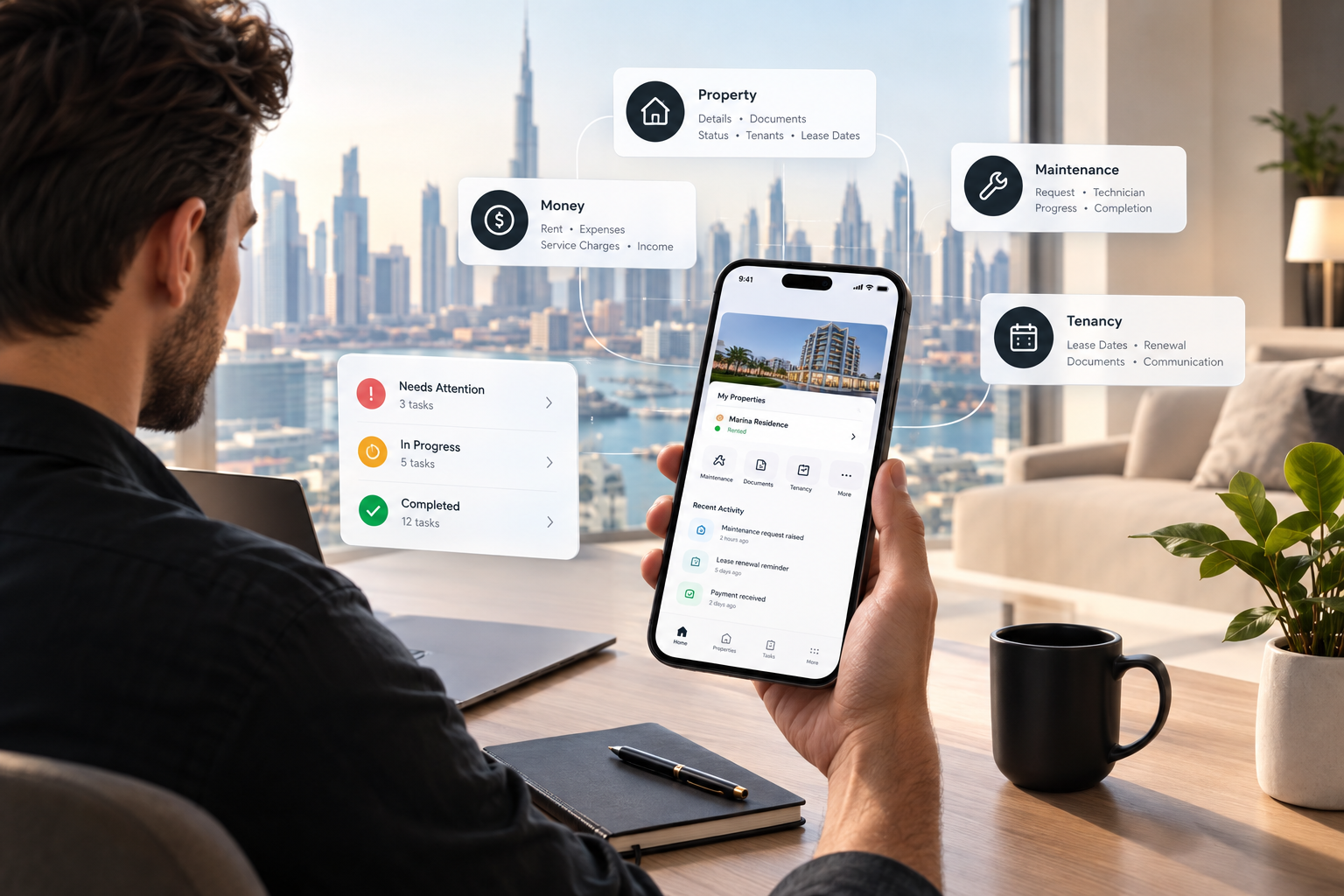
Rental disputes are only one part of managing a property. Landlords also need to keep track of tenants, payments, maintenance requests, property documents, offers and other tasks throughout the tenancy.
A digital property-management platform can make it easier to keep these activities organised.
With BSO Club, landlords can manage property-related activities digitally, upload properties, connect with brokers, explore tenant opportunities, request Ejari, request property valuations, order maintenance and track offers and tasks through the platform.
This can be particularly useful for landlords who manage properties remotely and want a more centralised way to keep track of their property-related requirements.
Instead of relying entirely on separate phone calls, messages, spreadsheets and emails, landlords can use a digital platform to organise more of their property activities in one place.
Want a more organised way to manage your Dubai property? Explore the BSO Club app and manage your property-related activities and requirements digitally through one platform.
Rental laws, procedures and requirements can change. For a specific dispute or eviction matter, verify the current requirements with the relevant Dubai authority or obtain qualified legal advice.
.avif)
.avif)
.avif)
.avif)
.avif)
.avif)
.avif)
.avif)
.avif)
.avif)
.avif)
.avif)

.avif)
.avif)
.avif)
.avif)

.avif)
.avif)

Professional property management in Dubai has been taken to a new standard by BSO® (Be Simply Organized), which provides UAE landlords with outstanding opportunities.
Download BSO Club now!