MAIN MENU
SEARCH
Services

Landlords

Tenants

Brokers

Vendors


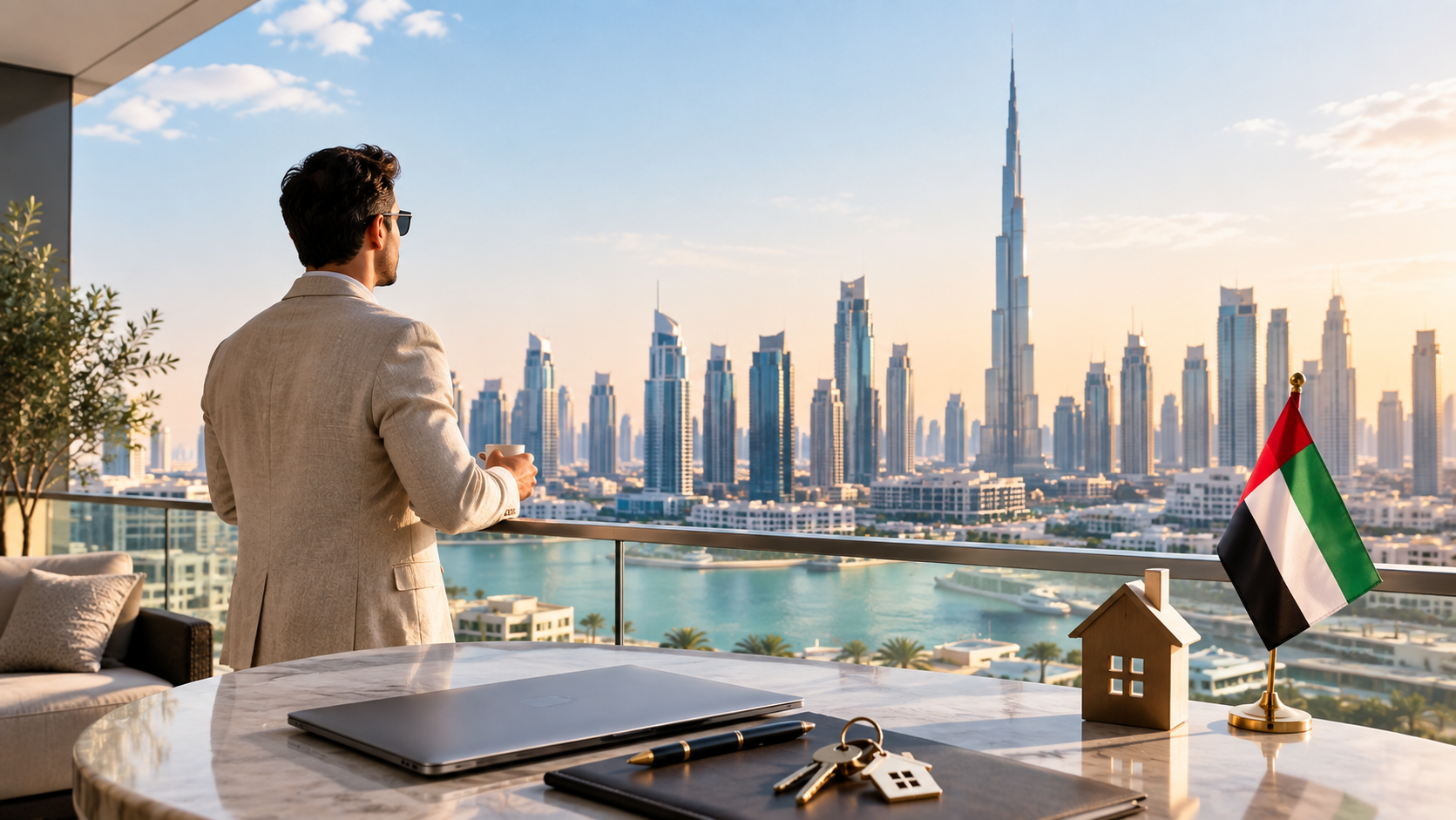
It's one of the first questions every international buyer asks before they even start browsing listings: can I actually own property here, or am I just renting long-term with extra steps?
The short answer is yes. Foreigners — of any nationality, with no UAE residency required — can own property outright in Dubai. The catch isn't whether you can buy, but where. Full ownership is only available in specific government-designated zones known as freehold areas, and understanding that distinction before you fall in love with a listing can save you from a very expensive disappointment.
Here's exactly how the system works, where you're allowed to buy, and what to check before you commit.
Dubai's foreign ownership framework runs on Regulation No. 3 of 2006, issued under Law No. 7 of 2006. This regulation gives the Ruler of Dubai the power to designate specific areas where non-GCC nationals can hold full freehold title — complete ownership of both the property and the land beneath it, registered in the buyer's own name with the Dubai Land Department (DLD).
Outside those designated zones, the rules change: foreign buyers are generally limited to leasehold or usufruct arrangements — the right to occupy and use a property for a fixed term, often up to 99 years, without actually owning the underlying land.
The important thing to understand is that the freehold list isn't static. It has expanded steadily since 2006, growing from a handful of pilot zones to more than 60 designated communities today, covering roughly 40% of Dubai's developed area. New master communities get added by decree as the city grows, which is exactly why it's worth double-checking a specific plot's status before transferring any money — a project that looks freehold on a developer's brochure still needs to be verified against the DLD's actual designation.
Dubai's freehold zones cover an enormous range of budgets and lifestyles, which is part of why the market attracts such a broad mix of international buyers. Broadly, they fall into a few categories:
Waterfront and prime central districtsDubai Marina, Palm Jumeirah, Downtown Dubai, Business Bay, Bluewaters, Emaar Beachfront, Dubai Creek Harbour, and JBR sit at the top of the market — high liquidity, strong rental demand, and the addresses most international buyers recognize by name.
Family villa communitiesArabian Ranches, Dubai Hills Estate, The Springs and The Meadows, Tilal Al Ghaf, The Valley, DAMAC Hills, and Town Square serve end-users looking for townhouses and villas, typically at a lower per-square-foot cost than the central waterfront districts.
Affordable and high-yield apartment zonesJumeirah Village Circle (JVC), Jumeirah Village Triangle (JVT), Dubai South, Arjan, Discovery Gardens, International City, Dubai Investment Park (DIP), and Dubai Sports City offer some of the most accessible entry prices in the city, and consistently post some of the strongest rental yields.
One nuance worth flagging: freehold status doesn't always apply to an entire district uniformly. Al Barsha is a good example — most of Al Barsha 1, 2, and 3 remain restricted to UAE and GCC nationals, while Al Barsha South (near Science Park and Arjan) is open to foreign freehold buyers. Don't assume an entire named district is freehold just because part of it is; always verify the specific plot.
Compared to most global property markets, Dubai's eligibility rules for foreign buyers are remarkably open:
There's also a well-known upside for larger purchases: properties valued at AED 2 million or above generally make the buyer eligible to apply for the UAE Golden Visa, a renewable long-term residency — one reason freehold ownership has become as much a residency strategy as a property investment for many international buyers.
Here's what most first-time international buyers don't fully appreciate until after the title deed is issued: purchasing the property is genuinely the simple half of the process. What determines whether that purchase turns into a strong-performing asset or a source of ongoing frustration is what happens after the keys are handed over.
A freehold title doesn't manage itself. Someone still has to price the unit correctly against the current market, market it to serious tenants quickly, screen and manage the tenancy in line with RERA's rules on notices and rent increases, and handle maintenance requests before a small issue becomes a costly one. For an overseas buyer who isn't based in Dubai — or a local investor juggling multiple units — this is usually where the returns quietly start slipping.
This is exactly the gap BSO Real Estate Management exists to close. Once you've secured your freehold property, BSO steps in to handle the operational side end to end: accurate market-based pricing, fast tenant placement through an established broker network, RERA-compliant lease administration, and responsive maintenance coordination — all the pieces that turn a good purchase decision into a genuinely strong net return. If you're buying remotely from abroad, this matters even more, since you won't be the one fielding a 2 a.m. maintenance call or negotiating a renewal in person.
For landlords who want to stay closer to the day-to-day without doing it all manually, BSO Club puts the same infrastructure directly in your hands — instant maintenance dispatch, valuation reports, and tenancy documentation, all from one platform.
A few practical steps worth taking before any purchase:
Foreigners can absolutely own property in Dubai — outright, with no residency requirement and no nationality restrictions — but only within the more than 60 designated freehold zones spanning everything from Palm Jumeirah to JVC. The framework is genuinely one of the most open in the world for international buyers, provided you verify the specific plot's status and understand what ownership type you're actually getting.
The purchase itself is straightforward. What happens next — pricing, leasing, compliance, and maintenance — is where the real return on that investment gets decided, and it's where a dedicated management partner like BSO or the BSO Club platform earns its place in the process.
.avif)
.avif)
.avif)
.avif)
.avif)
.avif)
.avif)
.avif)
.avif)
.avif)
.avif)
.avif)

.avif)
.avif)
.avif)
.avif)

.avif)
.avif)

Professional property management in Dubai has been taken to a new standard by BSO® (Be Simply Organized), which provides UAE landlords with outstanding opportunities.
Download BSO Club now!